More than just a shop

scroll down below our current eBay listings to read our mini-reviews of classic albums

Visit our eBay Shop

Currently in our eBay Shop

Monday, 11 July 2011

The Band - Cahoots


Capitol SMAS 651 (USA), released in 1971.  

The fourth album by The Band features the song-writing of Robbie Robertson on eight tracks; "Last Of The Blacksmiths", Where Do We Go From Here?",  "Shoot Out In Chinatown", "The Moon Struck One", "Thinkin' Out Loud", "Smoke Signal", "Volcano", and "The River Hymn" (plus one co-written withLevon Helm and Rick Danko, "Life Is A Carnival", one co-written with Van Morrison  who guests on the track ("4% Pantomime"), plus one song by Bob Dylan, "When I Paint My Masterpiece"). Another guest vocal is rendered on "Life Is A Carnival" by New Orleans great Allen Toussaint.  Again, no instrumental credits are listed.

The Band - Stage Fright


Capitol SW - 425 (USA), released in 1970. 

Another winning set of original songs, mostly penned by Robbie Robertson, including "The Shape I'm In", "The W. S. Walcott Medicine Show", "Daniel And The Sacred Harp", "Stage Fright", "The Rumour", "Time To Kill" and "All La Glory", while he co-wrote, with Levon Helm, "Strawberry Wine", and co-wrote two songs, "Sleeping", and "Just Another Whistle Stop" with Richard Manuel.  Another trawl through rural and 'old western' themes, ("W. S. Walcott"), while the title track deals with every musician's fear of exposure to an audience. The line-up, with Robbie Robertson, Garth Hudson, Richard Manuel, Rick Danko and Levon Helm is as the previous albums, but the cover doesn't say who plays what. 

The Band (second album)


Capitol STAO - 132 (USA), released in 1969. 


Here we have the second Band LP, featuring all compositions by Jaime Robbie Robertson, and including "Across The Great Divide", "Rag Mama Rag", with a great groove, "The Night They Drove Old Dixie Down" (later covered by Joan Baez, among others), "Up On Cripple Creek", "Rockin' Chair", "Look Out Cleveland", "The Unfaithful Servant", and the epic "King Harvest Has Surely Come", evoking the tragedies wrought by Dust Bowl farm foreclosures, and people striking for higher wages.  With Richard Manuel, he wrote "When You Awake", "Whispering Pines" and "Jawbone", while "Jemima Surrender" has Robbie collaborating with Levon Helm. The musicians all play many instruments each, with Garth Hudson, organ, clavinette, piano, accordion, soprano, tenor and baritone saxophones, slide trumpet(!);  Richard Manuel, vocals, piano, drums, baritone saxophone, mouth harp;Levon Helm, vocals, drums, mandolin, guitar; Rick Danko, vocals, bass, violin, trombone; and  Jaime Robbie Robertson, guitar, vocals & engineer. Guesting is producer John Simon, tuba, electric piano, "high school and peck horns & engineer".  What a great follow-up to the "Big Pink" album. 


The Band - Music From Big Pink


Capitol SKAO 2955 (USA), released in 1969


This is the debut album by The Band, who served a long apprenticeship in the 'roots music' part of the business, first as The Hawks, backing Canadian blues shouter Ronnie Hawkins, then latterly as the backing band for 'His Bobness', Bob Dylan!  Sometimes credited with introducing the 'electric phase' of Dylan's music, the group took a lot of flak from Dylan's 'pure folk' fans, even attracting audience boos and catcalls during some of the earliest concerts.  Be that as it may, this group of Canadians (with one transplanted Arkansas good ol' boy, Levon Helm on drums), revolutionised what then counted as 'rock 'n' roll'.  Gone were the bombast and posturing, in their place one found pure, honest and ethereal songs that harked back to the American Civil War and then further, evoking various facets of frontier life, along with just pure romantic subject matter.  With Robbie Robertson, guitar, Richard Manuel, keyboards, Garth Hudson, keyboards and occasional saxophone and  Rick Danko on bass, and with nearly everyone in the band singing lead and backing vocals, the sound was certainly unique.  The selections included on this first album included one by Dylan, 'I Shall Be Released', with two others co-written by Dylan with Manuel ('Tears Of Rage')and Danko ('This Wheel's On Fire').  Robbie Robertson contributes 'To Kingdom Come', 'Caledonia Mission', 'The Weight' (later covered by Aretha Franklin), and 'Chest Fever',  Richard Manuel  wrote 'In A Station', 'We Can Talk' (a parable dealing with the then generational gap and the anti-war movement), and 'Lonesome Suzie'.   A true landmark release.  


Of interest is the fact that the cover painting is by Bob Dylan.

Sunday, 22 May 2011

Gerry Mulligan et al - I Want to Live


Gerry Mulligan - The Jazz Combo (with Shelly Manne, Art Farmer et al) - I Want to Live!

London / United Artists LTZ-T 15161 (monaural) (UK release of United Artists UAL-4006(M)(USA)), 1958 

The film "I Want To Live", based on a true story, a tour de force for actress Susan Hayward, playing Barbara Graham, a wayward woman falsely accused of murder who is the last woman summarily executed in the state of California, was one of the first films with effective use of jazz in the soundtrack.  Part of the reason for this is the scoring by Johnny Mandel, also composer of such evergreen standards as "The Shadow Of Your Smile" again taken from a film soundtrack ("The Sandpiper").  Another reason was that there is a combo appearing in the film, a septet led by Gerry Mulligan, reflecting Barbara Graham's abiding interest in the music of Mulligan.  So, there are two soundtrack albums, this one and another, also on United Artists, which finds Mandel leading an orchestra featuring top West Coast jazz musicians.  In this album,Mulligan is joined by Art Farmer, trumpet; Bud Shank, alto saxophone, flute; Frank Rosolino, trombone; Pete Jolly, piano; Red Mitchell, bass; and Shelly  Manne, drums.  The programme they play is all composed by Johnny Mandel,and the titles include: 'Black Nightgown', 'Thme from I Want To Live', 'Night Watch', 'Frisco Club', 'Barbara's Theme', and 'Life's A Funny Thing'.  Two years later, Mulligan recorded 'Theme From I Want To Live' and 'Barbara's Theme' with his Concert Jazz Band, in versions very like the ones here.  

Woody Herman - Light My Fire


Phonogram / Chess Records 6310 127 (UK), 1969 (UK release of Cadet LPS 819 (USA)


Presenting the ever-changing Woody Herman, whose forward-thinking musical mind started working when he inherited the Isham Jones band in the late 1930s, then metamorphosed from "The Band That Plays The Blues" into one of the first big bands to take account of the changes that be bop wrought in the late '40s ("Four Brothers", and others!).  On this wonderful album, in the late '60s,  with a band full of powerhouse players, he acknowledged the music that was capturing the attention of the young audiences around the country.  One of the first bands to play at colleges and universities, the band presented here featured young graduates of the premier musical colleges in the country, such as Berklee School of Music and North Texas State.  Briefly, the selections are: 'Pontieo' (Lobo - Capinan). 'Here I Am, Baby' ('Smokey' Robinson), 'Hard To Keep My Mind On You' (Holmes), ' MacArthur Park (Jim Webb), 'Light My Fire' (The Doors), 'I Say A Little Prayer' (Bacharach - David), 'Hush' (South), 'For Love Of Ivy' (Quincy Jones - Bob Russell), and two originals by the arranger and album producer Richard Evans, 'Impression Of Strayhorn', and ' Keep On Keepin' On'.  Soloists include Woody himself on alto saxophone and clarinet, Sal Nistico and Frank Vicari, tenor saxophones, Nat Pavone, Sal Marquez and Henry Hall, trumpets, Robert Burgess, trombone, and John Hicks, piano.  A real swinger of an album, with a bit of a jazz-rock twist!


The Ellington All Stars - In A Mellow Tone


(stereo), Riverside / Polydor 673 026 (UK), 1958 (UK reissue of Clark Terry's 1957 U.S. album on Riverside RLP 12-246, "Duke With A Difference")
The great trumpeter Clark Terry is heard here with two different line-ups, both featuring Johnny Hodges, in an all-Ellington programme which, originally released in 1957, was called "Duke With A Difference".  Here entitled Ellington All-Stars - "In A Mellow Tone", this Riverside reissue has all of the original album's tracks save one; inexplicably omitted is the Duke's "In A Sentimental Mood".  Be that as it may, the selections here certainly sound a bit different when compared with their previously recorded Ellington versions.
The personnel includes Clark Terry, trumpet, all arrangements except 'Come Sunday; Johnny Hodges, alto saxophone; Paul Gonsalves, tenor saxophone; Quentin Jackson or Britt Woodmann, trombone; Tyree Glenn, trombone and vibes ('C Jam Blues' & 'Mood Indigo' only); Billy Strayhorn, piano (on 'Come Sunday' only); Jimmy Woode, bass; and  Sam Woodyard, drums.
The selections include 'C Jam Blues, 'Cottontail', 'Just Squeeze me', 'Mood Indigo', 'Take The 'A' Train', 'In A Mellow Tone', and 'Come Sunday', all written by Ellington except 'A Train', by Billy Strayhorn.  A very satisfying album by some of Duke's most illustrious alumni.

Oliver Nelson's Big Band, Live from Los Angeles


(monaural), EMI / Impulse MIPL 510 (UK), 1967 (UK release of Impulse A 9153 1967 (USA))

Working at Wallich's Music City, Hollywood, in 1967, I vividly remember often hearing Frank Strozier, one of the featured soloists herein, when he played with Shelly Manne & His Men at Shelly's Manne-Hole on North Cahuenga Blvd, as didMonty Budwig, the bassist here.  So I made the trek up to Marty's-On-The-Hill for this awesome big band's engagement in June, 1967. The band was made up of the crème de la crème of L.A.'s top session players, and as Oliver Nelson himself says in the album notes, "I never before had a trumpet section where each player could do everything - from playing lead to improvising jazz.  For that matter, we had that kind of flexibility throughout the band."  The personnel includes Oliver Nelson, arranger conductor, soprano saxophone; Buddy Childers, Bobby Bryant, Freddy Hill, Conte Candoli, trumpets; Billy Byers, Pete Myers, Lou Blackburn, Ernie Tack, trombones; Gabe Baltazar, Tom Scott (not even 20 when this was recorded), Bill Perkins, Jack Nimitz, Frank Strozier, reeds; Frank Strazzeri, piano; Monte Budwig,bass; Mel Brown, guitar, and Ed Thigpen, drums.  The selections include: 'Miss Fine' (Oliver Nelson), 'Milestones' (Miles Davis), 'I Remember Bird' (Leonard Feather), 'Night Train' (O. Washington - J. Simpkins - Jimmy Forrest), 'Guitar Blues' (Oliver Nelson), 'Down By The Riverside' (trad., arr. Oliver Nelson), and 'Ja Da' (B. Carleton).  Strozier solos effectively on alto on 'Milestones', also featuring Tom Scott on tenor sax,  and Strozier makes 'I Remember Bird' his own.  Guitarist Mel Brown is featured on both 'Night Train' and 'Guitar Blues', sounding 'down-home' and funky.  on 'Down By The Riverside', all the trumpets engage in chase choruses, and very exciting it is, too.  A fine 'live' big band tour de force.

Duke Ellington & Johnny Hodges play the blues - Back to Back


HMV Records Verve series (UK release of Verve MGV 8317), CLP 1316, 1959


Featuring Duke Ellington, piano; Johnny Hodges, alto saxophone;  Harry 'Sweets' Edison, trumpet; Les Spann, guitar; Al Hall or Sam Jones on bass and Jo Jones, drums, this is quite an unusual album in that the entire repertoire consists of the blues, in various celebrated selections, with Ellington on top form on piano, and Hodges, Edison and Spann soloing at the top of their game.  The tunes are: 'Wabash Blues' (Meinken - Ringle), 'Basin Street Blues' (Spencer Williams), Beale Street Blues' (W. C. Handy), 'Weary Blues' (Matthews), 'St. Louis Blues' (W. C. Handy), 'Loveless Love (aka 'Careless Love', a traditional tune first published by W. C. Handy), and 'Royal Garden Blues', also by Spencer Williams. This album has a four star rating in "The Virgin Encyclopedia Of Jazz", and is a companion volume to "Side To Side", also featuring Ellington and Hodges, and published in the same year.

Oscar Peterson Quartet Vol 2 - 10" LP


Clef / EMI Columbia Records 33C 9025 (UK), 1954


This 10" album is the companion album to 'Oscar Peterson Quartet', Clef MGC 116, released in 1952, and it was recorded at the same date, December 1951, in Los Angeles.   The quartet consists of Oscar Peterson, piano, with long-time collaborators Barney Kessel, guitar; Ray Brown, bass; and Alvin Stoller, drums.  As it's a 10" album, they present extended versions of only two selections, the Gershwins' "Oh, Lady Be Good" (12:14), and Heyman, Green & Sour's "Body And Soul" (11:58). This band swings like the clappers!


Finger Poppin' with The Horace Silver Quintet


Blue Note BLP 4008 (monaural) (USA) 'Deep groove' version, West 63rd Street on label. Released in 1959


One of my 'desert island' discs, this Horace Silver album came out just about the time I returned home from the Army, aged 20, and was working as a taxi driver.  I had the good fortune of having Horace in my cab as a fare, and found out that his band was playing at Mitchell-Ruff's 'Playback' Club in New Haven, and I was there that night, digging all the tunes heard on the present album, LIVE!   The wonderful line-up at the club, as here, was Horace Silver, piano & leader; Blue Mitchell, trumpet; Junior Cook, tenor saxophone; Eugene Taylor, bass; and Louis Hayes, drums, soon to leave Horace and join the Cannonball Adderley Quintet.  The tunes, all composed by Horace Silver, are: 'Finger Poppin'', 'Juicy Lucy', 'Swingin' The Samba', 'Sweet Stuff', 'Cookin' At The Continental', 'Come On Home' (the latter two covered vocally by Lambert, Hendricks & Ross), 'You Happened My Way', and 'Mellow D'.  

This is the very rare deep groove pressing (from the pre-1961 era when Blue Note albums used special dies attached to the pressing machine which held down the stampers for Side A and Side B during manufacturing.  These dies traditionally cut a deep groove into the label during a pressing).

Sunday, 3 April 2011

Patrick Street - Irish Times


Special Delivery (SPD 1033, 1990)


A much sought-after slice of vinyl from the Irish supergroup, featuring the seemingly ubiquitous Music for a Found Harmonium (if you've not heard it as background music on a range of TV shows in the past year or two, then you mustn't watch much telly!).  The music is great, and brilliantly performed - as you'd only expect from these luminaries: Andy Irvine on vocals, harmonica, mandolin and bouzouki; Kevin Burke on fiddle; Gerry o'Beirne on vocals and guitars;James Kelly on fiddle; Declan Masterson on uilleann pipes, low whistle and keyboards; Jackie Daly on accordion; Arty McGlynn on guitar; and Bill Whelan on keyboards.  Sheer class - and it sounds just wonderful on vinyl.


Track Listing
  • Music for a Found Harmonium
  • Brackagh Hill
  • Brian o'Lynn - The Woods of Old Limerick
  • Strokestown
  • The Newmarket Polkas
  • A forgotten Hero
  • Doorus Mill/The Rolling Reel/The Ballygow Reel/Dennis Murphy's Reel
  • In the Land of the Patagarange
  • Boston o'Connor/John Gaffney's Fling/The Kerryman's Fling
  • The Humours of the King of Ballyhooley

Micheal o'Suilleabhain - Oilean/Island


Virgin (VE 40, 1989)


A very unusual album, this - featuring as it does an adventurous mix of Ireland's finest traditional musicians in several original pieces of contemporary orchestral music (plus one trad/arr) by pianist and composer o'Suilleabhain, who is now Professor of Music at the University of Limerick.  This is no lame new-age crossover music, but sparky, rhythmic stuff which makes richly imaginative use of all the musical palettes at the composer's disposal.  At times it's reminiscent of Chick Corea, at others, it's like Bill Whelan's best work with Davy Spillane and in Riverdance.  The core piece on side 2 is "Oilean/Island" a suite in 3 movements.  Musicians on the album include: Matt Molloy on flute; Colm Murphy on bodhran; Mel Mercier on bones; Tony McMahon on accordion; andThe Irish Chamber Orchestra.


Track Listing

  • Heartwork
  • Ah, Sweet Dancer
  • Idir Eatarthu/Between Worlds
  • Carolan's Farewell to Music
  • Oilean/Island [suite]
    • 1st Movement
    • 2nd Movement
    • 3rd Movement
  • Ah, Sweet Dancer

High Level Ranters - Northumberland For Ever


Topic (12T186, 1968)


Tyneside's High Level Ranters were among the most innovative bands on the 1960s traditional folk scene: one of the first groups to give equal weight to songs and instrumental dance tunes.  The line-up on this album is like a who's who of North Eastern folk music at the time: Johnny Handle on vocals, accordion, guitar and piano; Colin Ross on fiddle, whistle, Northumbrian pipes and jews harp; Foster Charlton on fiddle and Northumbrian pipes; Tom Gilfellon on vocals and guitar; and Alistair Anderson on English concertina.  Recorded by Bill Leader and with sleeve notes from no less than A L Lloyd, this is an absolutely classic album which will be of interest to all folk fans, whether or not they're familiar with the Northumbrian and Tyneside traditions.

Track Listing
  • Shew's the Way to Wallington/The Peacock Followed the Hen
  • The Sandgate Girl's Lament/Elsie Marley
  • Bellingham Boat/Lambskinnet
  • Adam Buckham
  • Meggy's Foot
  • The Lads of North Tyne/The Redesdale Hornpipe
  • The Hexhamshire Lass
  • The Breakdown/Blanchland Races
  • The Lads of Alnwick/Lamshaw's Fancy
  • Byker Hill
  • Whinham's Reel/Nancy
  • Because he was a Bonny Lad/Salmon Tails up the Water/Sweet Hesleyside
  • Dance to Your Daddy
  • Billy Boy
  • Nae Guid luck aboot the Hoose
  • Mi' Laddie Sits Ower Late Up
  • The Keel Row/Kafoozalum/The Washing Day

Tuesday, 29 March 2011

Peggy Seeger & Ewan MacColl - The Long Harvest, Volume 6


Argo (DA 71, Record Six, 1967)


This rare LP is volume 6 of Ewan MacColl and Peggy Seeger's ambitious 1960s project to document over 10 albums some of the most significant of traditional ballads in their English, Scots and North American variants.  Tracking the way that songs developed as they travelled across national boundaries and to new continents highlights the fascinating evolution of musical traditions.  MacColl (a Mancunian of Scottish family) and Seeger (an American married to the Scots-Mancunian) were perfectly placed to understand these variants and to perform them in appropriate styles.  The sleeve notes and accompanying booklet are detailed and scholarly, documenting ballad versions in the Child canon as well as to oral sources.


The album contains a superbly researched 12-page booklet detailing each song's history, its international variations, and its lyrics.  A rare and historical document of importance both to understanding traditions and the folk revivalists who helped keep them alive.

Track Listing
  • Lady Isabel and the Elf Knight (Child 4)
    • May Colvin (Scots)
    • Lady Isabel and the Elf Knight (American)
    • The Outlandish Knight (English)
    • Billy Came Over the Main White Ocean (American)
    • The Willow Tree (American)
  • Old Woman of Slapsadam and Johnny Sands
    • The Wife of Kelso (Scots)
    • Rich Old Lady (American)
    • Johnny Sands (English)
  • The Douglas Tragedy (Earl Brand) (Child 7)
    • The Brave Earl Brand and the King of England's Daughter (English)
    • The Douglas Tragedy (Scots)
    • Earl Brand (American)
    • The Lady and the Dragon (American)
  • The Maid Freed from the Gallows (Child 96)
    • The Prickle Holly Bush (English)
    • Hangman (American)


Monday, 28 March 2011

Bob Fox and Stu Luckley, Nowt So Good'll Pass

(Rubber Records, RUB 028, 1978)

This is the first of two rare Fox and Luckley LPs which Colin Irwin rated as "classic".  It's hardly surprising - this album launched a thousand folk club standards.  The songs and arrangements were oft imitated; rarely if ever surpassed.  
Bob Fox's voice is one of the wonders of northern folk music - rich, melodic and powerful.  In any other context, it steals the show, but this is an album of complete arrangements, with voices and instruments interwoven with great musical intelligence.  Stu Luckley's acoustic bass absolutely drives the music and stands out as some of the funkiest playing ever to have derived from the folk scene.  His vocals are also a perfect foil for Fox's.  Bob Fox's own guitar, piano and dulcimer work is also faultless - both intricate and rhythmic.  
The material ranges from Tyneside favourites such as The Bonny Gateshead Lass and Sally Wheatley through to the wider folk tradition in songs such as Reynard the Fox and The Beggin.  Whatever they perform, Fox and Luckley make it their own.  It's hardly surprising that this remains a highly sought-after album.

Track Listing:
  • The Bonny Gateshead Lass
  • Reynard the Fox
  • Gypsy Davey
  • The Beggin
  • Bonny at Morn
  • Row Between the Cages
  • Sally Wheatley
  • The Sandgate Lass on the Ropery Banks
  • Isle of Islay
  • Doodle Let Me Go

Tuesday, 8 March 2011

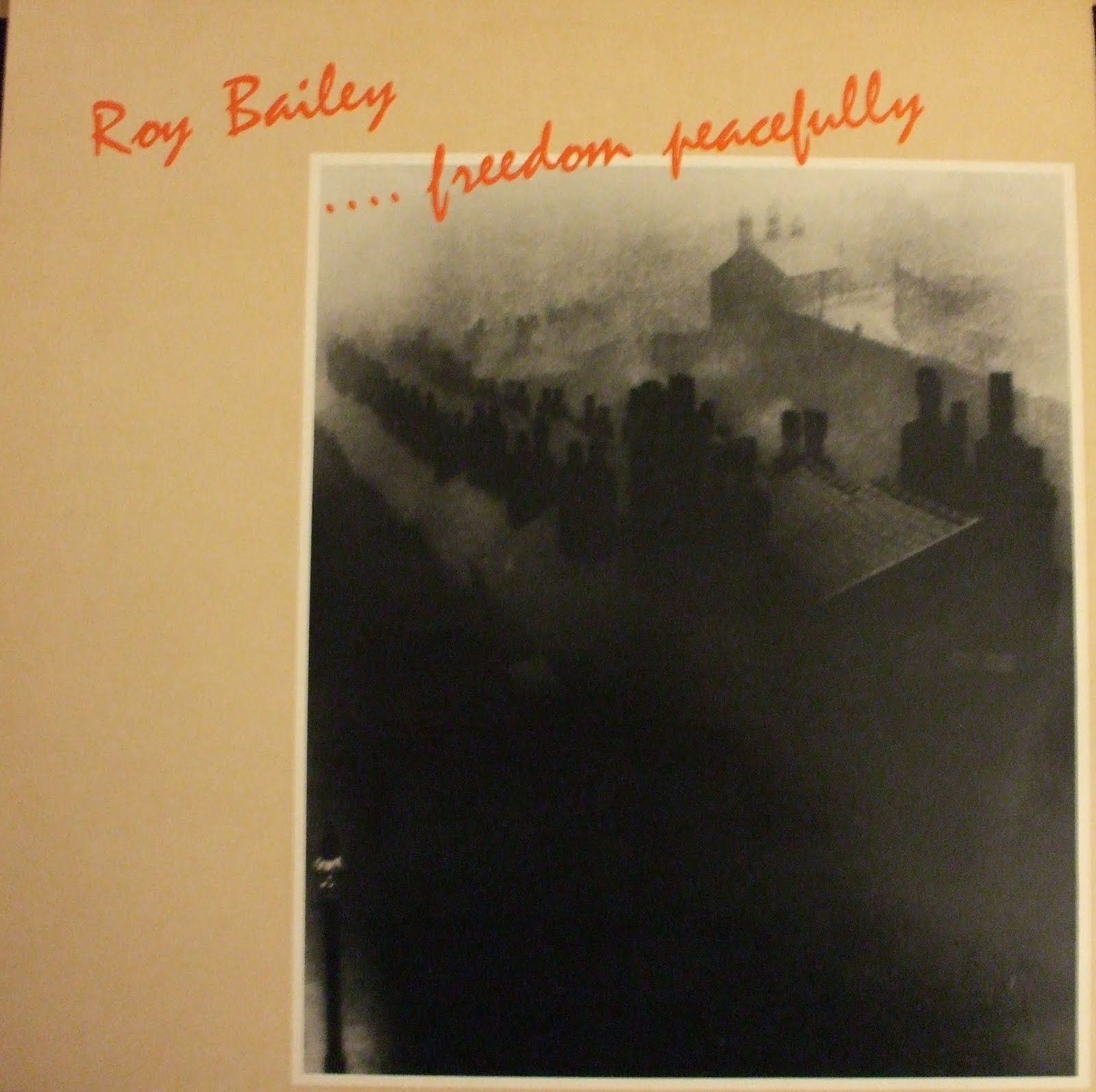
Roy Bailey - Freedom Peacefully

Fuse Records (CF 386, 1985)

An album of absolutely stunning songs performed by one of the folk scene's finest singers. With sleevenotes by Tony Benn, it's clear that this classic 1985 LP boasts its fair share of politics and songs of social justice: Bailey's genius is to deliver the songs with an elegance and clarity of expression that communicates anger and passion so much more successfully than any amount of 'over-emoting'. The arrangements use a mixture of acoustic guitars, accordion, brass, and backing vocals to bring out the musical colour of each song - and always tastefully emphasizing superb lyrics by great songwriters, notably Charlie Murphy's "Burning Times" and Si Kahn's "What You Do With What You've Got" (also a Dick Gaughan staple).


Wednesday, 1 December 2010

Andres Segovia - Golden Jubilee

(3-LP boxed set/booklet (Decca Gold Label DXJ 148 (USA), released in 1958))

Containing a wide cross-section of Segovia's artistry, this set is indispensable for classical guitar afficionados, winning for Segovia the 1958 Grammy Award. In researching this album on the internet, I found several comments on the inferior sound encountered when these performances were remastered for CD, which I can only ascribe to overzealous engineering of monaural recordings into stereo for the CD age. Here we have the original sound! Including works by De Murcia (Prelude and Allegro), Sor (Study No. 1 in C; Study No. 9 in A minor; Study No. 20 in G major; Two Minuets), Castelnuevo-Tedesco (Sonata "Homage to Boccherini"), Rodrigo (Fandango; Fantasia para un gentilhombre), Roncalli (Passacaglia; Gigua; Gavotta), Granados (Spanish Dance No. 10 in G), Granados-Llobet (Tonadilla), S. L. Weiss-Ponce (Prelude), Torroba (Pieces caracteristiques - 6 movements), Espla (Antano), Ponce (Allegro in A major; Concierto del Sur), Moussorgsky-Segovia ("The Old Castle" from Pictures at an Exhibition), Roussel ("Segovia"), Segovia (Study),and Tansman (Three Pieces for Guitar). On Rodrigo's Fantasia para un gentilhombre and Ponce's Concierto del Sur , Segovia is accompanied by Symphony of the Air, Enrique Jorda conducting, these two selections taking up the whole of Disc 3. The present album is from my own personal record collection, which I have since mostly replaced with the CD versions. Hence the sale of these much-loved albums.

The 15 page booklet includes a beautiful portrait of Segovia, a poem "The Guitar - for Andres Segovia" by Carl Sandberg and a wonderful essay entitled "The Guitar, that beautiful and mysterious instrument" by Mario Castelnuevo-Tedesco, as well as copious excerpts from Segovia's autobiography, then a work in progress. This is a real collector's item.

Tuesday, 30 November 2010

Julian "Cannonball" Adderley - Inside Straight


Fantasy Records FT 517 (UK), released by Fantasy USA as F-9435, in 1973


This is one of the best of the late period "Cannonball" Adderley albums, and like the best of the early Riversides and later Capitols, it's a 'live' recording, done at Fantasy's Berkeley California studios, in front of an invited audience, in June 1973. 


Holdovers from earlier incarnations of this wonderful group include brother Nat Adderley, cornet, Walter Booker, bass, Roy McCurdy, drums, and recent addition Hal Galper, playing electric piano, and the composer of three of the selections here, "Inner Journey", "Snakin' The Grass", and "Second Son".  Nat and Julian wrote the title track, "Inside Straight", Nat contributes "Five Of A Kind", and everyone just swings their butts off! 

Freddie Hubbard - Super Blue

CBS 82866 (UK), (from Columbia JC 35386 USA), released in 1978

Freddie Hubbard is heard here, playing four of his own compositions ("To Her Ladyship", "Take It To The Ozone", "The Gospel Truth", and "Theme For Kareem" (dedicated to Kareem Al Jabbar, the world famous basketball player), as well as "Superblue", the title track composed by B. Ighner, and Gino Vanelli's "The Surest Things Can Change". Critics have tended to dismiss Hubbard's Columbia recorded output as light-weight "fusion", but this is a solid effort, and the material is first-rate. He is joined on this wonderful album by Hubert Laws, flute, Joe Henderson, tenor saxophone, Ron Carter, bass, Kenny Barron, piano, and Jack DeJohnette, drums. Producer Dale Oehler plays additional keyboards on "Super Blue", and the great George Benson guests on and plays the guitar solo on "To Her Ladyship". (I had the pleasure of hearing the Hubbard band at the 1978 Middlesborough Jazz Festival, when many of these tracks were played live, and Larry Klein, later Joni Mitchell's husband, played bass.)